Collaborative sketching
To kick off ideation, I often use collaborative sketching as a fast, inclusive way to turn insights into tangible concepts. With a clear grasp of the product vision, business goals, user needs, and challenges, I facilitated a hands-on sketching session with key stakeholders and team members. This exercise encouraged open dialogue, rapid idea generation, and alignment early in the design process. The concepts we sketched together served as a springboard for developing wireframes for a leading Italian insurance provider.
Prep work
Before the session, I carefully curated the scenario and selected key screens to ensure they reflected the most critical business capabilities and aligned with the overarching product vision. The prompt I crafted was grounded in real user workflows:
“Let’s assume the Claim Handler has logged in and landed on their homepage. Based on this, sketch the sections they might see—how would they access key claim details, and what would the journey to reviewing and making a payment look like?”
This setup provided just enough structure to spark creativity while keeping everyone focused on solving meaningful user and business problems.
During the session
I kicked off by introducing the Collaborative Sketching exercise—framing the objective and how we’d use the next two hours to co-create ideas. Participants were grouped into four diverse teams, each intentionally composed to reflect a mix of user personas and stakeholder perspectives.
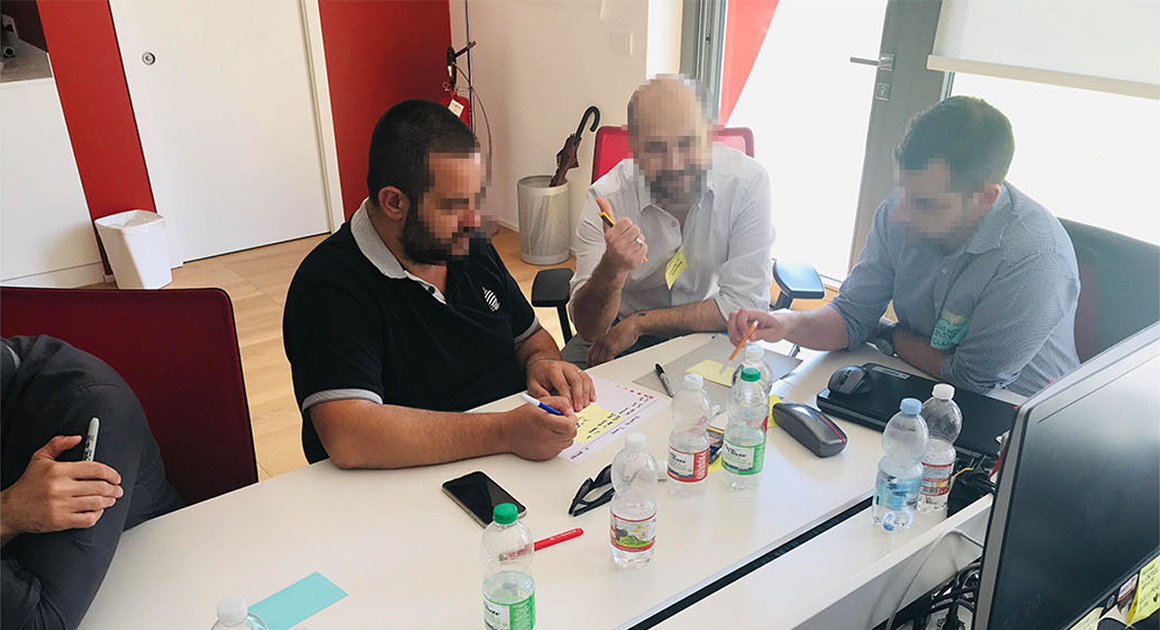
A candid moment of one team deeply immersed in sketching ideas for the scenario we crafted.
We handed out paper, pencils, markers, and highlighters, encouraging teams to freely explore their ideas. I set the tone by clarifying that these sketches didn’t need to be polished wireframes—the goal was to surface different viewpoints and spark creative thinking. Their input would later inform critical design decisions.
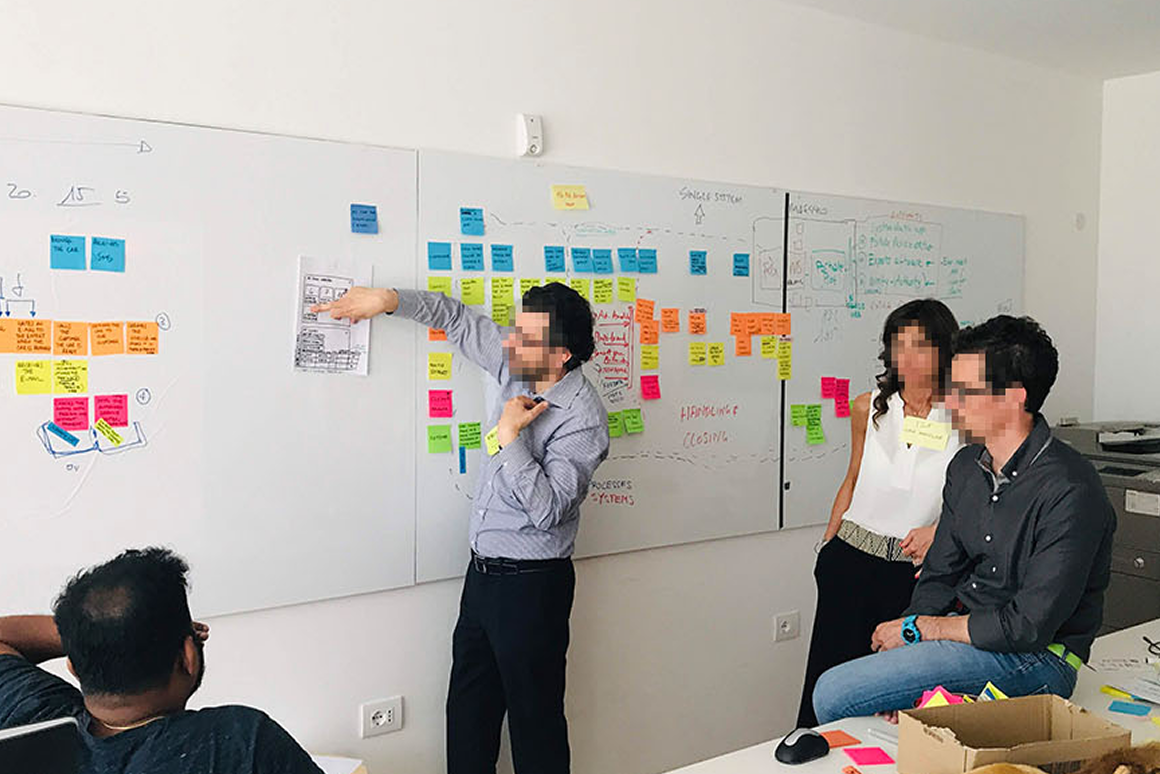
A candid glimpse of another team presenting their take on the landing page, brought to life through quick sketches.
What followed was a lively, hands-on session filled with brainstorming and animated collaboration. Each team sketched their interpretation of the interface, focusing on how users might interact with the scenario we had set. The presentations that followed sparked thoughtful discussions, offering me valuable insight into how the product’s information architecture could take shape.
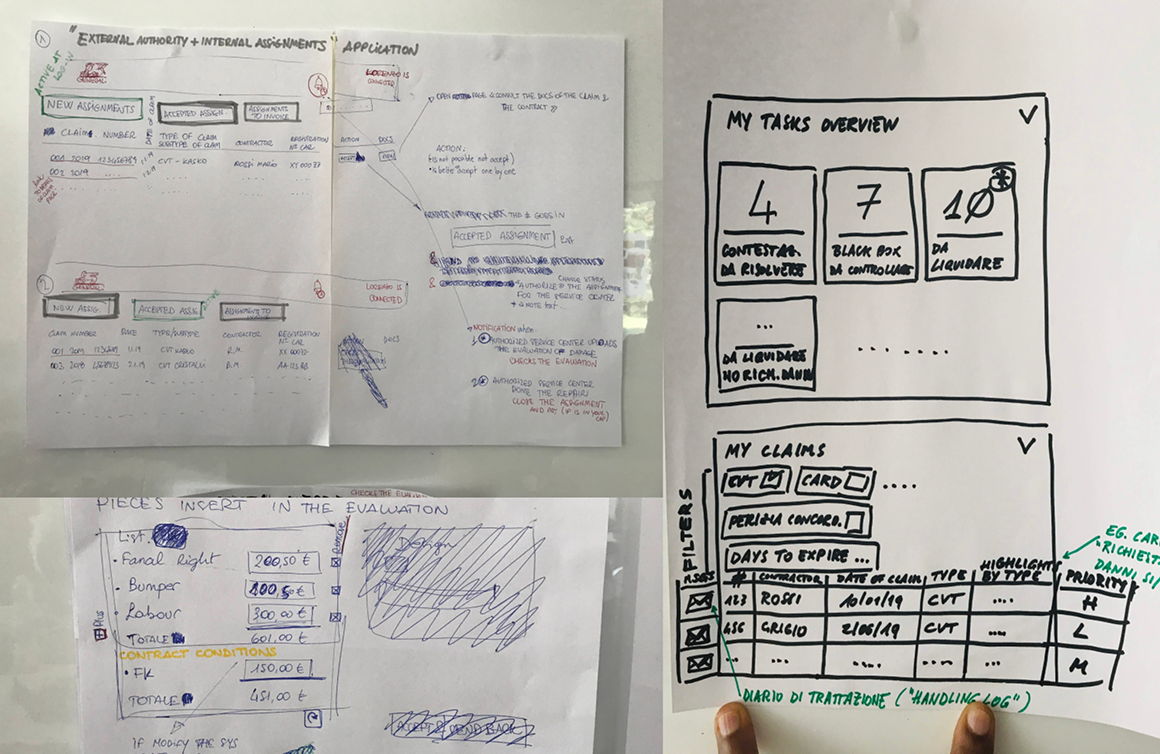
A glimpse into the diverse ideas captured through sketches by various teams during the collaborative session.
Analysis & Consolidation
After the sketching session, I gathered all the outputs from the different teams and began analyzing common patterns, standout ideas, and unique perspectives. While each team approached the scenario differently, several recurring elements began to emerge—giving clear signals about user expectations and priorities. I mapped the sketches against business goals, user needs, and technical feasibility to identify which ideas could be carried forward. By clustering similar concepts and highlighting distinctive innovations, I was able to create a consolidated view of the landing page layout and functionality.
.png)
Capturing a moment of me translating consolidated team insights into my own set of sketches to shape the next design direction.
Benefits of this approach
The collaborative sketching approach fostered early alignment across stakeholders by bringing diverse perspectives into the same room. It encouraged creative thinking, surfaced a wide range of ideas, and enabled faster decision-making. By involving participants directly, it built shared ownership and uncovered key usability insights early—providing a strong, validated foundation for the wireframes that followed.