Ethnographic Study
One standout example of this approach was during my work with a leading retail brand in Italy. We conducted an ethnographic study to observe how store Heads of Department (HoDs) placed orders with Distribution Centers (DCs) and Suppliers. By immersing ourselves in their day-to-day routines, we gained a firsthand understanding of their workflows, pain points and decision-making. These real world insights proved invaluable, helping us answer key user experience questions and shape design solutions that truly aligned with their needs.
Prep work
We kicked off the study with a brief meeting with the store manager to identify the best days for observation. We also connected with a few selected Heads of Department (HoDs), sharing a quick overview of our observation approach and checking when they typically placed their orders. The initial engagement helped us plan thoughtfully, ensuring our presence was respectful of their time and seamlessly fit into their daily routines.
During the session
We began shadowing and observing him when he picked up the legacy device. We engaged with him discreetly, ensuring we did not overly disrupt his work, especially considering the tight deadline for placing orders. He approached a designated shelf displaying products and identified products with drained or low stock levels.
Upon identifying a product requiring restocking, the HOD scanned its electrical label to add to the order list. When uncertain about stock availability in the back room, the Head of Department (HoD) meticulously walked to the back room & conducted an exhaustive stock verification before adding the product to the order list. He returned to the shelf & continued scanning, ensuring all necessary products were accounted for.
Once he completed the scanning, he transferred his order list to the back office system and coordinated with other HODs to collectively place the orders from the back office system.
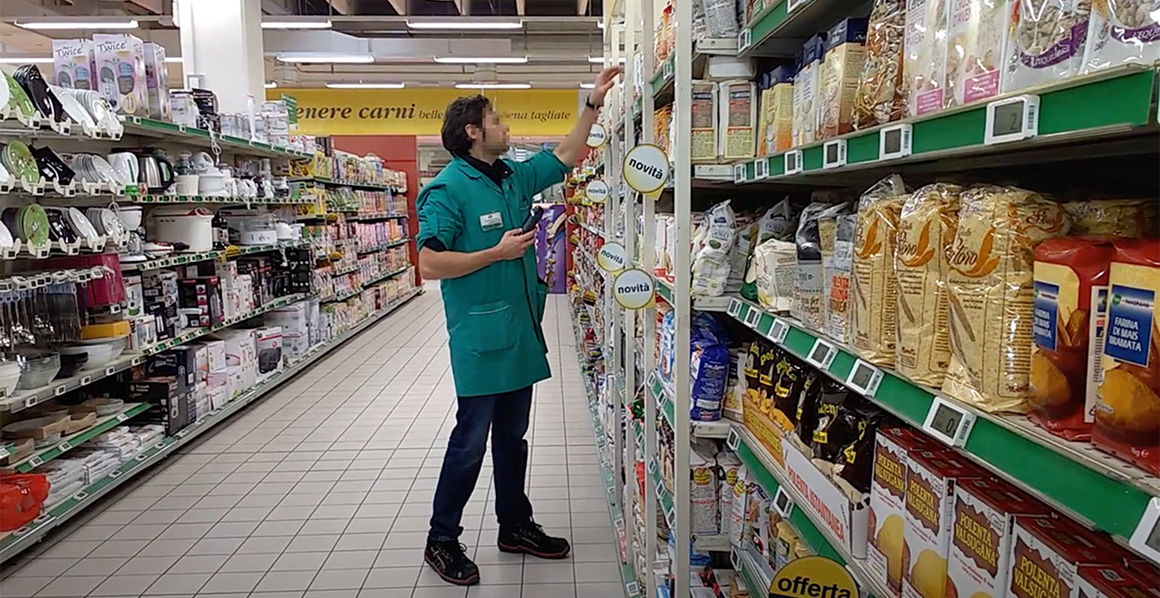
A snapshot from our ethnographic study: A store HOD scanning barcodes of products in his category to place orders and manage stock levels for the next day.
Once he completed the scanning, he transferred his order list to the back office system and coordinated with other HODs to collectively place the orders from the back office system.
Insights & key critical decisions from the study
Through our ethnographic study, we gained critical insights that directly influenced key product and technical decisions. By closely observing the daily workflows of store Heads of Department (HoDs), we uncovered subtle but important needs—ranging from device ergonomics and system performance to information accessibility and order management processes.
1. We must select a device that can be operated with one hand, as he uses his other hand to organize shelves during order placement. This requirement made us exclude large-screen tablets from our choices for future product devices.
2. Observing that the legacy system boasted a rapid response time, we recognized the necessity of developing a product that could maintain that speed. This insight steered us towards making critical technical decisions, such as choosing between HTML and native app development and including an offline mode.
3. We heavily depended on his memory for stock levels or frequently walked between the back office and the shelves to verify available stocks or past orders. This behavior prompted us to enhance the new product with comprehensive information, including stock status and order history, and other relevant details, accessible immediately upon scanning the product barcode.
4. Despite completing his order list, we noted that the Head of Department (HOD) had to wait to place the order because he had to coordinate with other HODs since the store policy sends only one consolidated order to each Distribution Center (DC) and suppliers. This process of merging lists, verifications, and approval consumed significant time in the back office. This insight led us to implement a system where orders can be placed directly from the new device, complete with validation and synchronization features, thereby removing the complexities and delays associated with the back office procedures.
Benefits of this approach
This approach allowed us to identify user needs that traditional interviews or surveys might have missed, ensured our design decisions were grounded in actual behaviors rather than assumptions, and helped us anticipate operational challenges early in the product development cycle.